
Careers in Constitutional Law

by Kylie de Chastelain

Many students are fascinated by the constitutional issues they engage with in the classroom and the Asper Centre regularly receives questions about how to work towards a career in Constitutional law. To help address these questions, the Asper Centre hosted a panel discussion on February 12th, 2020, entitled: “Careers in Constitutional Law.”

Four brilliant lawyers were invited to share about their experiences in constitutional law practice. Emily Chan, a staff lawyer at Justice for Children and Youth, was joined by Sinéad Dearman, an Associate at Olthuis Kleer Townshend LLP; Geetha Philipupillai, an Associate at Goldblatt Partners; and Padraic Ryan, Counsel at the Constitutional Law Branch of the Ministry of the Attorney General of Ontario. Each panelist spoke about the realities of long-term litigation, working with rotating governments, and the complexities of constitutional law. The panelists’ career experiences are detailed below, followed by a round-up of their best advice for aspiring constitutional lawyers. As you’ll see, there’s more than one path towards working in constitutional law.

Emily Chan

Staff Lawyer, Litigation and Community Development, Justice for Children and Youth

Emily Chan’s day-to-day work is very diverse, ranging from privacy law to human rights matters and constitutional law issues. Her official title is “Community Development Lawyer” – a role which suits her passion for advocacy and community organizing. Initially, Emily never planned on having a litigation career; preferring research and writing to public speaking and debate. Despite this, litigation now comprises a significant portion of her practice.

Emily has represented Justice for Children and Youth before the Supreme Court of Canada on a number of interventions. Notable among these are Prime Minister of Canada v Khadr, 2010; an intervention about Omar Khadr and the rights of children who are found in armed combat overseas, and Kanthasamy v Canada, 2015; a case that considered the best interests of a minor who sought refugee protection in Canada on humanitarian grounds. Interventions such as these frequently involve Charter-based challenges – as was the case in Khadr, where Emily’s arguments on behalf of Justice for Children and Youth focused on Khadr’s section 7 Charter rights to life, liberty, and security of the person. Ultimately, Emily’s work – while not exclusively constitutional – does involve a significant amount of constitutional law; proof that a career in constitutional law doesn’t have to be “all or nothing.”

Sinéad Dearman

Associate, Olthuis Kleer Townshend LLP

Sinéad was called to the bar in 2018 and was a member of the Indigenous Law students Association while at the University of Toronto’s Faculty of Law. She works in child protection law and represents a variety of First Nations governments in matters relating to child welfare and custody. This work is demanding, and Sinéad spends approximately 75% of her time travelling to remote First Nations communities across Ontario, where she meets with band governments and stakeholders and represents them in child welfare cases. In addition to child protection work, Sinéad has appeared before the Canadian Human Rights Tribunal, suing the Canadian government for discriminatory underfunding in public services (see: First Nations Child and Family Caring Society of Canada v Canada, 2019). Sinéad also works in Indigenous law-making; helping First Nations to refine and uphold their legal traditions and advocating for their inclusion within the broader Canadian legal system.

Sinéad believes that in order to practice Indigenous law, and constitutional law more broadly, you have to be able to show up in “mind, body, and spirit.” The work requires more than intellect; it requires being present and involved beyond the law. For Sinéad, this has often meant being in ceremony with her clients and becoming involved in the community beyond what might be expected in a non-Indigenous lawyer-client relationship.

Geetha Philipupillai

Associate, Goldblatt Partners

Geetha was also called to the bar in 2018, and one month later found herself working on the high-profile case involving Premier Ford’s reduction of Toronto City Council seats (see: The City of Toronto v Ontario (Attorney General), 2018). Although Geetha does not generally practice in labour law, the case presented an opportunity to represent union clients with a vested interest in the structure of Toronto’s city council. It was valuable, she said, to have the opportunity to work on a constitutional case, even if it was not in a practice area she typically engages with. In general, Geetha’s day-to-day work at Goldblatt involves employment law, civil class action suits, and claims from LawPro; the company that provides Ontario lawyers with professional liability insurance. Geetha’s work with LawPro frequently involves defending lawyers against claims of negligence.

In addition to all of this, Geetha, who was an Asper Centre Clinic student, served as pro-bono junior counsel to the Asper Centre on the Morris intervention. This case is challenging criminal law sentencing with respect to systemic racism and specifically anti-black racism. The Asper Centre’s intervention focuses on the need for substantive equality in sentencing and the corresponding rights engaged by s. 15 of the Charter. For Geetha, working in constitutional law has meant making the most of the opportunities that come her way. Although her legal work is not exclusively constitutional, she has chosen to make this an area of focus in her career.

Padraic Ryan

Counsel, Constitutional Law Branch, Ministry of the Attorney General of Ontario

Padraic always knew that he was interested in constitutional law and litigation, and endeavoured to work in government jobs instead of full-service Bay Street firms as a result. As a member of the Constitutional Law Branch, Padraic’s work is exclusively constitutional. In essence, he supports branches of the ministry that have constitutional questions or claims before them. Typically, these claims relate to statutes or policies that are being challenged, and while Padraic’s work involves a significant amount of litigation, he also provides advice to government ministries facing this kind of claim.

The work is full of variety, and Padraic says that one of the best parts of his job is the constant learning. In this kind of work, you never feel as though you’ve “specialized” or “mastered” a particular area of law – instead, you’re constantly learning about statutes you never knew existed and consulting with government ministries across a broad range of practice areas. By way of example, Padraic says he has worked on fire code prosecutions, labour relations issues, and interventions relating to federal immigration law. The challenges of government work are ever-present, he says, and dealing with election cycles, changing governments, and funding constraints can make his job very interesting. For those interested in a diverse range of legal issues that all engage constitutional law, a government position like Padraic’s might be the perfect fit.

Career Tips for Aspiring Constitutional Lawyers

  • Take a variety of courses. Emily advises that you take a variety of courses while you’re in law school because constitutional questions can arise in “any area of law.” Having a bit of knowledge across practice areas is helpful, because you simply can’t anticipate all the areas of law you might end up working in. Emily pointed to her own experience, noting that although she doesn’t practice refugee and immigration law, much of her constitutional work has involved Charter-based advocacy for refugee children and youth. Having the legal context that comes from a bit of coursework experience is highly valuable.
  • Have a demonstrated interest. All the panelists agree that, when it comes to hiring, it’s nice to see an applicant with a clear interest or passion. Whether it’s through your extra-curriculars, course selection, non-law school activities, or the organizations you belong to, make sure to highlight what you are interested in. Padraic emphasized that this doesn’t mean you must do every single extra-curricular related to constitutional law; but it’s good to be able to show participation in at least one or two constitutionally-related activities if this is something you are hoping to practice later on. The Asper Centre offers some fantastic ways to get involved, including: The Constitutional Law Clinic, Student Working Groups, and Summer Fellowship Program.
  • Consider administrative law. Geetha and Padraic suggest that administrative law is a great area of focus for constitutional-law hopefuls. Administrative law contains many of the same legal themes as constitutional law, and has the advantage of being highly marketable in the legal world. Geetha emphasized that administrative law can also be useful in practice because often constitutional challenges are brought by people who are unable to finance protracted litigation. When you understand administrative law well, you are better able to advise clients as to their strategic options and help them to achieve their goals without engaging in costly litigation.
  • Remember that your law practice will likely be diverse. With the exception of Padraic, who works in a role exclusively devoted to constitutional law, none of the panelists focus solely on constitutional work. Instead, constitutional law is simply one of many practice areas they engage in. Remember that it is rare to find a full-time job in constitutional law. Instead, think about adjacent practice areas that you are passionate about, and jump at the chance to do constitutional work when you can.
  • Don’t worry if the path isn’t straight. Sinéad says that while law school can be challenging intellectually, mentally, and emotionally, do your best to stick with it. Remember that law school and legal practice look very different, and being a young lawyer is nothing like being a young law student. Rely on the routines and activities that make you feel good and give you a sense of meaning beyond law school, and try not to get caught up in comparison and competition. As Padraic says, it’s better to think about the kind of work you want to do, and where you think you’ll fit best career-wise than to spend time trying to “check boxes” for the sake of it.

Kylie de Chastelain is a 1L student of law at the University of Toronto and the current Asper Centre work-study student.
Substantive Equality in Sentencing: Morris and Sharma


by Mashoka Maimona

On January 22, 2020, the Asper Centre hosted three lawyers involved in two cases before the Ontario Court of Appeal (ONCA) in which the Asper Centre intervened — R v Morris and R v Sharma — which consider how historical and social context can invaluably inform the sentencing process for marginalized people.  Emily Hill (Aboriginal Legal Services, intervener in Sharma and Morris), Jessica Orkin (Goldblatt Partners, counsel for Asper Centre in Sharma), and Nader Hasan (Stockwoods LLP, counsel for Asper Centre in Morris) participated in a dynamic panel, moderated by Professor Hamish Stewart of the University of Toronto’s Faculty of Law, discussing how historical disadvantage can be considered in sentencing to achieve substantive equality for marginalized groups.

Hasan started the panel discussion by describing Morris and Sharma as seminal cases that motivate one to become a criminal lawyer. Sharma is a constitutional challenge to ss. 742.1(c) and (e)(ii) of the Criminal Code, which eliminate conditional sentences for certain offences with mandatory minimum custodial sentences. Sharma is a young, mixed Indigenous mother convicted of a drug importation offence, who sought a conditional sentence so she could continue caring for her child. She would have been a suitable candidate for such a sentence but for these provisions preventing drug importers from receiving a conditional sentence.

Sharma’s circumstances illustrate that despite the Supreme Court’s (SCC) aspirations in Gladue, incarceration rates for Indigenous people in Canada continue to increase. Gladue outlined how the principle of restraint in s. 718.2(e) of the Criminal Code should be applied while taking into account the history of colonialism and bias in the criminal justice system when sentencing Indigenous offenders. That was more than two decades ago. “The Indigenization of Canada’s prison population is nothing short of a national travesty,” according to Correctional Investigator of Canada Ivan Zinger in a troubling statement released a day before this panel. He warned that number and proportion of Indigenous individuals under federal sentence has reached new historic highs (30% of the total inmate population, compared to 5% of the Canadian population) due to “disturbing and entrenched imbalances.” The numbers are even more troubling for Indigenous women, who now make up 42% of female inmates.

Sharma is about addressing these statistics and the crisis of Indigenous overrepresentation, “pushing the court to get to a solution,” according to Hill. When the justice system criminalizes acts that Indigenous women often turn to out of desperation due to high rates of poverty and food insecurity, conditional sentences are an essential and effective tool for keeping Indigenous people out of jail so that they can serve their sentences in the community, while maintaining jobs, schooling, and caring for their families and children. Hill also raised the difficulties of relying on the Charter’s s. 15 equality argument in Sharma, with the trial judgement barely engaging (or agreeing) with their points — despite that Truth and Reconciliation Commission called for the federal government to allow judges to depart from mandatory minimum sentences and restrictions on conditional sentences (which the government committed to). The SCC’s 2018 decision in Alliance, tackling an amended s. 15 analysis involving the removal of a legislative remedial scheme (pay equity in that case), could have been a “game-changer” in Sharma, suggested Orkin. “Everybody has been looking to ways to advance equality arguments other than through s. 15, because the test in s. 15 is so inchoate, onerous, and unpredictable,” she said, including through s. 12 (cruel and unusual treatment or punishment).

In Morris, the ONCA will consider how systemic factors should shape the sentencing framework for Black Canadians. Morris, a Black man, was convicted of possession of illegal firearms and received a 12-month sentence, reduced from 15 months for Charter breaches. In his decision, the sentencing judge was mindful of the personal social context in which Morris committed the offence (among other mitigating and aggravating factors), referencing reports from anti-Black racism experts to paint a picture of Morris as a product of systemic discrimination, which colours the lived experiences of many Black Canadians. The Crown appealed the sentence on the ground, among others, that the judge erred by imposing an unfit sentence.

Hasan pointed to a predecessor to Morris from 2004, R v Hamilton, where two single Black mothers were found guilty of smuggling cocaine. They asked the court to consider a Gladue-like framework to impose conditional sentences, as they were similarly situated to Indigenous offenders, with life experiences shaped by the legacies of colonialism and systemic racism. While the trial judge imposed conditional sentences on the two women, the ONCA found he erred in concluding that conditional sentences were appropriate because of the effects of systemic racism, making it clear that an offender’s membership in a historically disadvantaged group does not justify a lesser sentence. Hasan believes the time has come to revisit and overturn the ONCA judgment. Sixteen years later, the impact of systemic racism on Black Canadians — although different historical circumstances than Indigenous peoples — is now accepted as fact by mainstream society.

While the Crown in Morris agrees that systemic factors such as historical disadvantage can be considered in sentencing cases involving Black Canadians, they want to set up obstacles to access a remedial Gladue-type framework for Black Canadians with a high evidentiary onus. “The Crown wants the accused person to prove that systemic racism caused his or her offending behaviour. How do we prove that?” asked Hasan. The SCC has rejected the “causal link” requirement in the context of Indigenous sentencing in R v Ipeelee.  “Youth is a mitigating factor in a sentencing process. But we never ask a young person to prove how your youth caused you to commit this particular offence. It’s nonsensical. It’s an impossible burden,” Hasan said, a burden even experts struggle to meet. Furthermore, the Asper Centre argues it is unfair to ask marginalized people to demonstrate their life circumstances “caused” their crime, putting forward more robust guidelines for considering these factors informed by substantive equality principles.

While it makes sense that Morris be the next leap after Gladue for a remedial framework in sentencing, Hasan agreed that there may be a concern among jurists of this “slippery slope” argument opening up the “floodgates.” The fear may be that every racialized accused will use this argument. “That is not an elegant argument or a legal argument. But it is a real hurdle,” he said. Orkin added that some of that fear comes from a fundamental misunderstanding of what Gladue is trying to do (as SCC outlined in Ipeelee): it is not a “get out of jail free card,” but about realizing the goal of a fit sentence guided by the principles of substantive equality, which help achieve that goal.

Orkin discussed the benefits and challenges to representing joint public interest intervenor clients in test case litigation. The Asper Centre and the Women’s Legal Education and Action Fund (LEAF) are jointly intervening in Sharma, with Orkin representing both clients as a single party. “There are particular challenges in the criminal justice sphere, in some cases, for working with public interest groups like LEAF, whose perspective draws on different feminist strands,” she said. While defence counsel is focused on the accused, in many contexts, the feminist concern is on the complainant. While not an issue in Sharma or Morris, if conditional sentencing falls for Sharma, for example, it would also fall for a wide array of cases that include various sexual offences. So, dealing with different organizations could result in joint clients disagreeing because of their divergent public interest policy lens on an issue, mirroring society’s diverse conceptions of what the criminal justice is and who it serves.

Mashoka Maimona is a 2L JD student at the Faculty of Law and was an Asper Centre Clinic student in Fall 2019.

Courts Without Cases: The Law and Politics of Advisory Opinions

By Kylie de Chastelain

The Asper Centre recently hosted Professor Carissima Mathen, author of Courts Without Cases: The Law and Politics of Advisory Opinions (2019), for a dynamic Constitutional Roundtable about her new book, with Professor Lorraine Weinrib as discussant.

Professor Mathen’s book, described by Professor Weinrib as a “milestone” in Canadian Constitutional writing, explores the under-studied but vitally important institution of Supreme Court references. References are opinions given in the absence of a live case. They are put forward to the Court by the executive branch and the opinions that result are called “advisory opinions.” Those who have studied constitutional law will be familiar with references, but what many don’t realize is that some of Canada’s most important judicial decisions did not emerge from cases, but from references. Same-sex marriage, assisted human reproduction, Senate Reform, Quebec secession and patriation are only some of the landmark opinions that have emerged from references. In Professor Mathen’s words, each constitutes an important “constitutional moment,” and yet, references have remained chronically unexplored by legal scholars. Mathen has sought to change that through her book, which is the first focused examination of references in Canadian legal scholarship.

References are not uniquely Canadian but the way they are handled by our judicial system sets Canada apart from other Anglo-American countries. In South Africa, Israel, India, and numerous European countries, specialist “constitutional courts” address a variety of issues through references. As Professor Mathen emphasized, what is notable about the Canadian context is that the Supreme Court performs “both an adjudicative and an advisory function.” This function was enumerated in the Supreme and Exchequer Court Act, which created the Supreme Court of Canada, in 1875.

Professor Weinrib suggested that the reference phenomenon was institutionalized “by accident,” but that it was much needed, in part because Canada’s formal written constitution was initially fragmented and incomplete. In particular, the lack of a domestic amending formula made it very difficult for the federal government to govern. The reference function allowed federal and provincial governments to raise questions and discern the legal elements of political issues before bringing them back to the legislature; effectively using the court to establish a guiding framework for the nation’s development. This dynamic also allowed the executive to pre-emptively explore important legal issues before a case emerged and a decision was handed down in a conventional trial.

However, in the present day, Professor Mathen has argued that references and advisory opinions pose two potential problems with regard to Canada’s federal system. The separation of powers is essential to how the Canadian state operates, but by vesting courts with the ability to do more than adjudicate cases, references might be viewed as extending the judicial function beyond its optimal boundaries. In addition, because references can only be put forward by the executive branch, they arguably align the judiciary and the executive and exclude the legislature, even though the issues addressed in references are often very salient to the legislative context. Further, this arrangement could give the impression that the court is subservient to the executive; threatening the idea that the judiciary is independent. Courts are expected to address the references put forward to them, but as Professor Mathen explained, the Supreme Court is not always so accommodating.

On several occasions, the Supreme Court has refused to engage with the references put to them by the executive. Sometimes, the Court has rejected the requests outright, and in other cases it has re-interpreted the questions asked. By way of illustration, Professor Mathen pointed to the Patriation Reference, where the executive asked whether there was a constitutional problem with amending the constitution without provincial consent. In its opinion, the Court divided on its interpretation of the question, exploring whether all provinces – or only some provinces – had to agree with a constitutional amendment in order for it to pass.

Most interesting in Professor Mathen’s view is the fact that the Supreme Court has never explained why it sometimes chooses to refuse reference requests. Section 53(4) of the Supreme Court Act stipulates that the court has a duty to hear and consider all references, but despite this, the Court reserves the right to ignore references outright or to ignore sub-questions in a given reference, as it did in the Same-sex Marriage Reference.  Here, the Court refused to answer Question 4 of the reference, which asked if the opposite-sex requirement for marriage for civil purposes was consistent with the Charter. ostensibly because it was concerned about any “confusion” that could emerge if it answered in the negative.  More specifically, the Court stated that it would “exercise its discretion” not to answer the question, in part because the federal government had “stated its intention to address the issue of same-sex marriage legislatively regardless of the Court’s opinion” and that answering Question 4 could potentially undermine the government’s “stated goal of achieving uniformity in respect of civil marriage across Canada” if it answered the question affirmatively. Mathen suggested that the Court’s refusal to answer demonstrates the intention of the Court to retain first and foremost a legal role, as the chief constitutional arbiter, and the primary interpreter of its norms.

Here lies a final and fascinating point about Supreme Court references: they are not legally binding. References are only advisory and technically co-exist with treatises, textbooks, and other scholarly legal works that have no authoritative control over judges and their decisions. But practically speaking, we do not treat references in this way. As Professor Weinrib pointed out, references serve an incredibly important function in establishing norms. Indeed, we treat references as legally binding decisions; they are taught in law schools alongside other case law, and are treated by legislatures and governments with the same gravity as a binding Supreme Court decision. This could be, as Professor Weinrib suggested, because references sometimes feel more methodologically sophisticated; more conceptual and holistic. References help to develop a rule of law that reflects fundamental constitutional principles from the outset. This is undeniably a strength of the dynamic that exists in Canada.

Ultimately, Professor Mathen has produced an accessible and engaging account of the reference power in Canada, which, for all its curiosities, is undoubtedly an integral aspect of Canadian judicial practice and legal development.

Kylie de Chastelain is a 1L student of law at the University of Toronto and the current Asper Centre work-study student.


Asper Centre students mark Student Law Clinic Global Day of Action

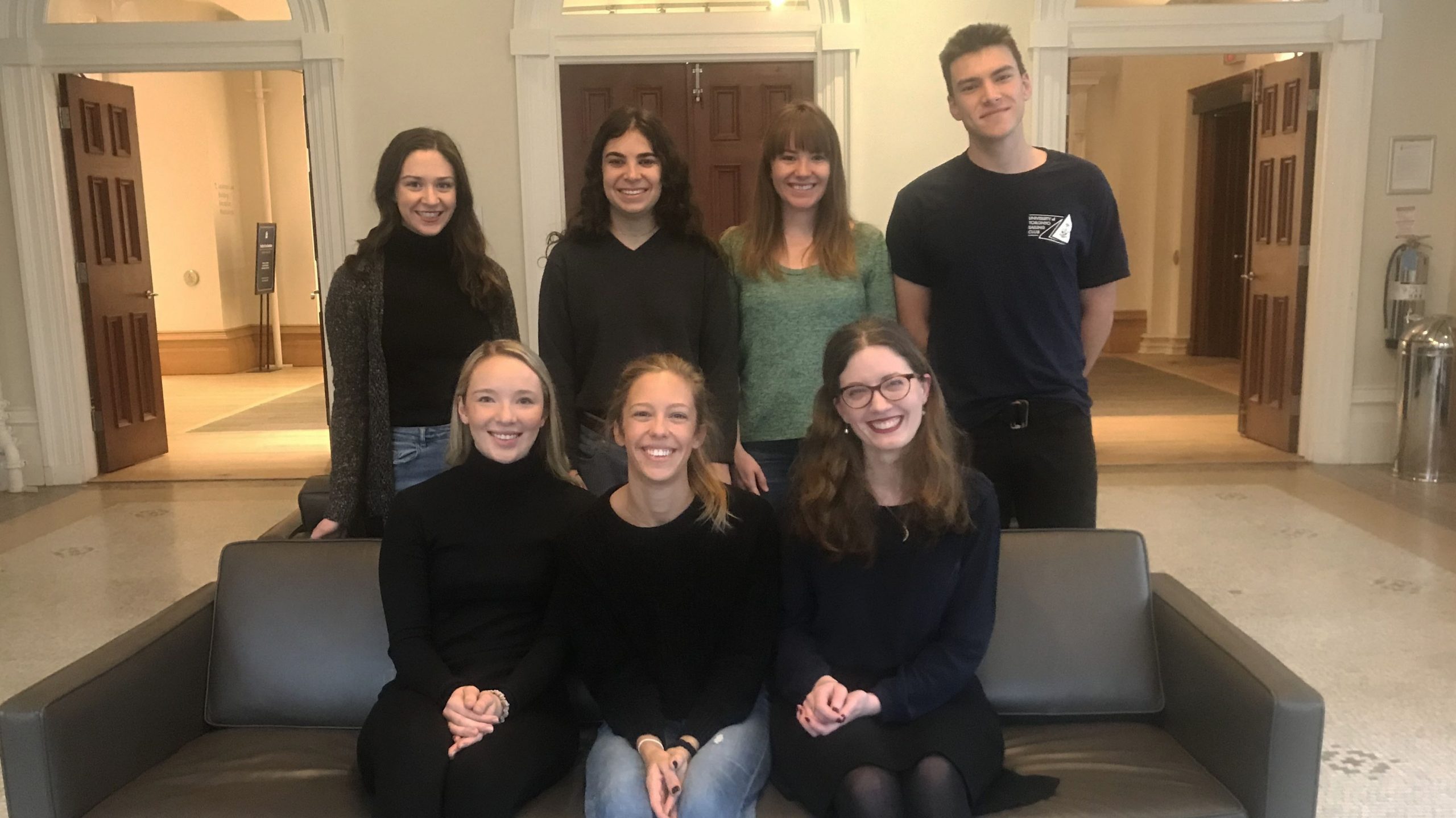
Back row (left to right): Mackenzie Cumberland; Clara Pencer; Leah Kelley; and Florian Nagy. Front row (left to right): Madeleine Carswell; Keely Kinley; and Yara Willox. Members not pictured: Madeleine Andrew-Gee; Adam LaRiviere; Leora Chapman; Haleigh Ryan; and Courtney Cowan. via @UTLaw 

November 18, 2019 marks a Global Day of Action against air pollution by more than 30 student law clinics from around the world.

The Climate Justice student working group at the David Asper Centre for Constitutional Rights at the University of Toronto’s Faculty of Law is calling on the provincial and federal governments to take meaningful action to curb emissions in Ontario.

“The recent federal election and the wave of climate strikes by young people have brought a renewed focus on climate-related issues,” says second-year law student Keely Kinley. “The idea that our Constitution could be used to safeguard and strengthen environmental rights is gaining momentum.”

The David Asper Centre is devoted to realizing constitutional rights through advocacy, research, and education, and plays a vital role in articulating Canada’s constitutional vision to the world. U of T law students can become involved in the Asper Centre’s work by volunteering with one of their student working groups. The student-led initiatives bring together 10-15 students to undertake research and advocacy in conjunction with academics, civil society groups, or members of the bar on Charter rights advocacy or current constitutional law issues.

“As a student law clinic with a commitment to social justice, the Asper Centre is committed to raising awareness of the issue of climate change in our teaching, research and activism, and to finding ways to support law students to contribute to the struggle for climate justice through the Canadian Charter of Rights and Freedoms,” says Cheryl Milne, the centre’s executive director.

Approximately forty percent of Canada’s petrochemical industry is condensed into a 15-square-mile area in Sarnia, Ontario known as Chemical Valley. The student working group highlighted Chemical Valley as an example of a place where years of government inaction and an inadequate emissions regulation has resulted in a health and environmental crisis.

Just south of the city are the traditional lands of the Aamjiwnaang First Nation community. Members of the Aamjiwnaang First Nation have been asking the government to review emissions standards for years, to no avail. A whistleblower has lodged three complaints over the past decade alleging inadequate engagement with the Aamjiwnaang community.

The Climate Justice working group also cites a 2017 report of the Environmental Commissioner of Ontario that observed that “Indigenous people and communities are disproportionately affected by environmental problems.”

“There are strong arguments to be made that both the provincial and federal governments have duties under the Canadian Charter of Rights and Freedoms to protect the Aamjiwnaang community and other residents of Chemical Valley from the harms of pollution,” says Kinley.

Section 7 and Section 15 of the Charter could both be invoked in order to protect individuals from insufficient government action in the sphere of environmental rights.

“There are any number of examples we could have chosen from. Unfortunately, Chemical Valley is just one example of where the different levels of government have failed in their obligations towards local communities,” says Yara Willox, a second-year law student. “We were happy to learn about the Ontario government’s decision to begin a two-year health study in Sarnia this fall, but it’s not enough.”

Kinley adds that a group of young Canadians recently initiated a lawsuit against the federal government for infringing their Charter rights by not taking sufficient steps to combat climate change.

“There is international precedent for this sort of litigation, and we’ll be paying close attention to the outcome.”

With files from the Climate Justice working group

Read the Climate Justice working group’s op-ed

Asper Centre students call on the Ontario and federal governments to act on air pollution

via UofT Faculty of Law News: https://www.law.utoronto.ca//news/students-call-ontario-and-federal-governments-act-air-pollution

Monday, November 18, 2019


Today, November 18th, is the Student Law Clinic Global Day of Action for Climate Justice. We are a student working group at the University of Toronto Faculty of Law and, on this day, we call on our provincial and federal governments to take meaningful action to curb emissions in Ontario. The harmful consequences of air pollution are widespread and government inaction only exacerbates them. In Sarnia’s “Chemical Valley”, for example, where petrochemical facilities are responsible for around 10% of Ontario’s total emissions, the government’s inadequate regulations and foot-dragging have contributed to a health and environmental crisis.

The health data speaks for itself. Sarnia’s cancer rates are significantly higher than the rest of Canada’s. In the Aamjiwnaang First Nation community, whose traditional lands are just south of the city, the birth ratio of baby girls to boys is nearly 2:1. A wide range of respiratory problems and conditions that impair lung function have been linked to the pollutants emitted by Chemical Valley’s oil refineries and chemical plants. The list goes on. These findings are deeply troubling and should have spurred government action long ago. While we are encouraged that the provincial government will begin a two-year health study in Sarnia this fall, this is, in itself, insufficient.

Last month, a whistleblower painted a damning picture of the government’s response to air pollution in Chemical Valley. The whistleblower lodged three complaints between 2009 and 2019 alleging inadequate engagement with the Aamjiwnaang community. The Ontario government’s reluctance to take effective action on this issue is, unfortunately, not without precedent. In 2018, Ecojustice brought an application for review of the province’s air quality standards pursuant to Ontario’s Environmental Bill of Rights on behalf of two affected individuals. The government did not change its course.

Fortunately, there is another way to hold our governments accountable. The idea of using the Constitution to defend environmental rights is gaining momentum. Both the provincial and federal governments have clear duties under the Canadian Charter of Rights and Freedoms to protect the Aamjiwnaang community and other residents of Chemical Valley from the pollution that affects their land and their persons.

Section 7 of the Charter recognizes every individual’s right to life, liberty and security of the per-son. It encompasses the right to be free from physical or psychological harm resulting from gov-ernment actions or omissions, and could arguably be invoked to protect individuals from future harm. The negative health outcomes in Chemical Valley, if they are conclusively linked to deficient regulations, could form the basis of a section 7 claim.

Section 15 of the Charter protects individuals from discrimination. A law or policy that inordinately affects individuals on the basis of race, ethnic origin, or other grounds may constitute discrimination under the Constitution. Following a recent visit to Canada, the United Nations Special Rapporteur on human rights and hazardous substances and wastes, Mr. Baskut Tuncak, not-ed not only the inadequacy of the existing regulatory framework, but also its “deeply unsettling” impact on the Aamjiwnaang First Nation. A 2017 report of the Environmental Commissioner of Ontario similarly observed that “Indigenous people and communities are disproportionately affected by environmental problems.” The recently reelected Liberal government ought to be especially concerned about these findings, given its campaign promise to fully implement the UN Declaration on the Rights of Indigenous Peoples, which recognizes Indigenous peoples’ “right to the conservation and protection of the environment.”

Governments have a legal duty to correct the harmful and discriminatory regulatory schemes and environmental policies that are endangering communities across Canada. From Chemical Valley to Alberta’s tar sands, the dire consequences of government inaction are becoming increasingly clear. Last month’s federal election revealed voters’ renewed focus on climate-related issues. Climate strikes galvanized students across the country and drew attention to the social inequalities that flow from bad environmental policy. A group of young Canadians recently initiated a lawsuit against the federal government for infringing their Charter rights by not taking sufficient steps to combat climate change. These developments show that Canadians want better air quality, sustainability, and environmental rights. Provincial and federal governments should take note and take action before it’s too late.

Climate Justice working group members:

1Ls (first-year law students):
Clara Pencer
Adam LaRiviere
Mackenzie Cumberland
Madeleine Andrew-Gee
Leah Kelley
Leora Chapman
Courtney Cowan
Florian Nagy
Madeleine Carswell
Haleigh Ryan

Group leaders:
Yara Willox (2L)
Keely Kinley (2L)