
David Rabban argues for a distinct theory of the right to academic freedom, as the U.S. and state governments tighten the screws on universities

By Daniel Minden

As the Trump administration and state governments ramp up efforts to regulate American universities, David M. Rabban, an expert on the law of academic freedom and professor at the University of Texas School of Law, highlights that the U.S. Supreme Court has recognized a distinct right to academic freedom under the First Amendment of the U.S. Constitution – but argues that this distinct right must be properly elaborated by courts and theorized by scholars. 

On November 13, 2025, Rabban was hosted by the David Asper Centre for Constitutional Rights and the H.R. Jackman Faculty of Law Program on the Critical Analysis of Law for a lecture covering the interpretation of academic freedom as a First Amendment right.  

The foundational Sweezy and Keyishian decisions 

Rabban noted that although the text of the First Amendment does not explicitly refer to academic freedom, the Supreme Court of the United States identified academic freedom as a distinct right under the First Amendment in Sweezy v. New Hampshire, 354 U.S. 234 (1957), a McCarthy-era case arising from the state of New Hampshire’s investigation of a Marxist professor. In another landmark case, Keyishian v. Board of Regents 385 U.S. 589 (1967), the Court held that “Academic freedom is a special concern of the First Amendment” – an idea cited in hundreds of subsequent cases. 

Despite the Court’s holding in Keyishian, Rabban argues that the Court has never adequately explained why academic freedom is “special,” and that the large majority of academic freedom cases lack a substantive analysis. To fill in the gaps, Rabban has focused on interpreting the meaning of academic freedom through research presented in his new book, Academic Freedom: From Professional Norm to First Amendment Right. 

Interpreting the right to academic freedom 

What exactly is protected by the right to academic freedom as currently understood by American courts? Rabban finds that courts have principally protected the content of teaching and research. At times, they extended the freedom further, to protect, for instance, the confidentiality of classroom discussions, the confidentiality of medical records, and confidentiality guarantees extended by historians to interviewees previously involved in the Irish Republican Army. 

Other aspects of professors’ conduct have been treated inconsistently by courts. In some instances, courts have protected pedagogical decisions by professors when those decisions were justified on academic grounds as determined by peer academics. However, in Trustees of Indiana University v. Curry, No. 18-1146 (7th Cir. 2019), the United States Court of Appeals, Seventh Circuit, found that the plaintiffs’ argument that the use of fetal tissue in research was protected by the First Amendment was a “non-starter” since the statute forbidding the practice “regulates conduct, not speech.” 

Professors’ “intramural speech,” specifically, their comments about university policies or public issues outside of their domain of specialty, has also been treated inconsistently by courts. Some decisions have extended the right to academic freedom to include a professor’s comments about university policies, but in most cases, courts have decided cases pertaining to intramural speech under the broader First Amendment umbrella.  

In addition to professors, the U.S. Supreme Court has also protected the right of institutions to academic freedom. In Regents of the University of California v. Bakke, 438 U.S. 265 (1978), the Court affirmed a concurring decision from Sweezy which found that the “four essential freedoms” of a university are the rights “to determine for itself on academic grounds who may teach, what may be taught, how it shall be taught, and who may be admitted to study.” 

The insufficiency of general First Amendment rights when applied to professors 

Why is a specific right to academic freedom required, given the broader First Amendment? Rabban argues that general First Amendment rights as applied to professors are inadequate, necessitating the specific right. 

To be protected speech under the general First Amendment, speech by public employees must be about matters of “public concern.” In cases involving professors, courts have excluded from the “public concern” such categories as “abstract theorizing,” criticism of university administrators, and comments by professors protesting the denial of tenure to other professors. These categories of speech are fundamental to the work of any professor but are left unprotected by general First Amendment rights, argues Rabban. 

In addition, in Garcetti v. Ceballos, 547 U.S. 410 (2006), the U.S. Supreme Court held that the speech of public officials “pursuant to their official duties” is not protected under the First Amendment. Obviously, this rule restricting the scope of First Amendment rights would massively impede the protection enjoyed by professors, if applied to them. The Court even recognized the possible need to exclude professors from the Garcetti rule, but since the facts of the case did not involve academic freedom, the Court left aside the issue of the rule’s applicability to professors. 

The need to theorize the right to academic freedom as a distinct First Amendment right 

To compensate for the failure of the general First Amendment Rights to adequately protect professors, a specific right to academic freedom is needed, says Rabban. A proper theory of the right to academic freedom can both justify its existence and define its scope. Given the lack of U.S. Supreme Court jurisprudence adequately laying out the justification and scope of the right to academic freedom, Rabban has taken on this work himself.  

As a starting point, Rabban cites a publication by the American Association of University Professors (AAUP) which contains, in his view, the best justification of academic freedom. The AAUP highlights professors’ unique function in society, which is to apply their expertise to the pursuit and dissemination of knowledge which is a benefit to society, a role which would necessarily be impeded if professors could not reach academic conclusions that meet academic standards but offend legislators or members of the public. 

For Rabban, this unique role of the professor in society justifies the existence of a separate First Amendment right to academic freedom. The justification of the right can also help determine its scope. Rabban argues that the scope of the right must include pedagogical decisions and speech about educational issues at universities – but since the theory of the right relies on expertise to justify specific rights to academic freedom, the intramural expression of professors outside their expertise should not be protected by the right to academic freedom. 

Academic freedom in Canada 

During the question-and-answer period, one questioner noted that in Canada, the content of the right to academic freedom is generally seen as the right of professors not to be sanctioned by universities for exercising their general freedom of expression rights. The questioner noted that this Canadian conception of academic freedom is generally protected through collective agreements, rather than constitutional litigation. The efficacy of protecting academic freedom in Canada through collective bargaining is only possible because Canada has a much higher rate of faculty union membership as compared to the United States. 

Current challenges in the United States 

In concluding his talk, Rabban highlighted the current pressure being exerted by the U.S. federal government and state governments on academic freedom rights. Though Rabban accepts that legislatures do have a role in determining the general curriculum requirements for public universities, he contends that through their recent acts, legislatures are inappropriately supplanting the role of universities by determining the specific content of courses. These state acts are far more intrusive than previous state interventions such as the Cold War-era questioning of Professor Sweezy, argues Rabban.  

Even though current state regulations have created a chilling effect and rendered certain American professors hesitant to teach about topics such as race and sex, Rabban argues that the right to academic freedom matters and is worth exercising despite the risk of penalties such as forced early retirement. Rabban notes that in times of totalitarian rule, academics have given up a great deal, including their liberty, to preserve the right to academic freedom. Rabban’s advice to academic colleagues is not to be chilled, and to exercise their rights. 

Daniel Minden is a Research and Communications Assistant with the Asper Centre. He is a 1L JD candidate at the University of Toronto Jackman Faculty of Law.
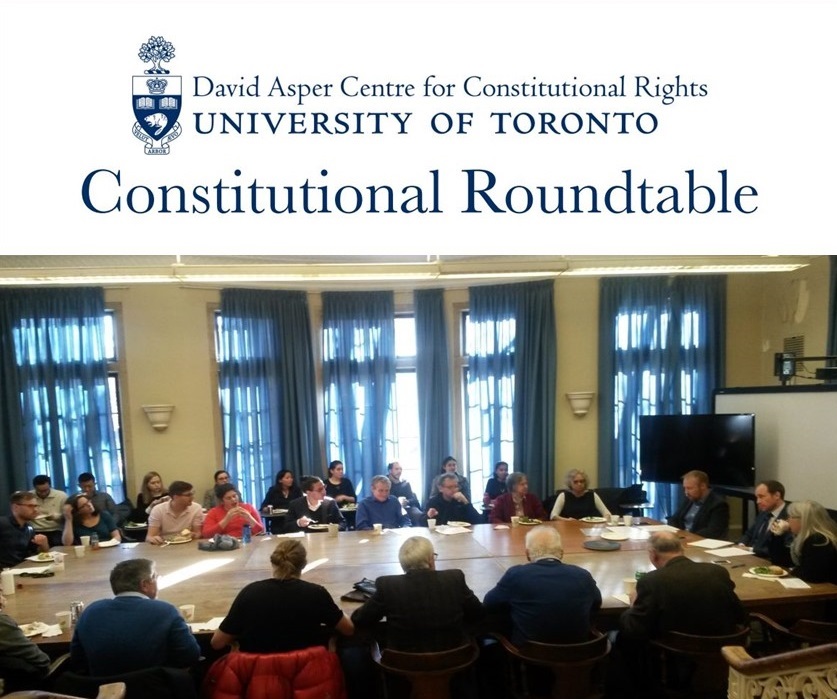
Constitutional Roundtable with Professor David M. Rabban

The David Asper Centre for Constitutional Rights’ Constitutional Roundtables are an annual series of lunchtime discussion forums that provide an opportunity to consider developments in Canadian constitutional theory and practice and comparative constitutional law.  The Constitutional Roundtable series promotes scholarship and aims to make a meaningful contribution to intellectual discourse about Canadian constitutional law.

We are pleased to be hosting author and Professor David M. Rabban of the University of Texas at Austin School of Law for an in-person Constitutional Roundtable on Thursday November 13, 2025 at 12h30. A light lunch will be provided.

The presentation is titled: The Meaning of Academic Freedom as a First Amendment Right

ABSTRACT: This talk will trace the judicial development of academic freedom as a First Amendment right of professors, beginning in 1957, and the judicial extension of the First Amendment right of academic freedom to universities, beginning in the 1970s.  It will point out that the courts have clearly recognized academic freedom as First Amendment right, but have disagreed about its coverage.  Nor have courts developed its meaning, as judges themselves have often complained.  I will assert that academic freedom should be understood as a distinctive First Amendment right that protects the expert academic speech of professors and the educational decisions of universities.  Academic freedom is related to but differentiated from general First Amendment rights of political expression.  I will conclude by applying this understanding of academic freedom to recent intervention by federal and state governments into university affairs.

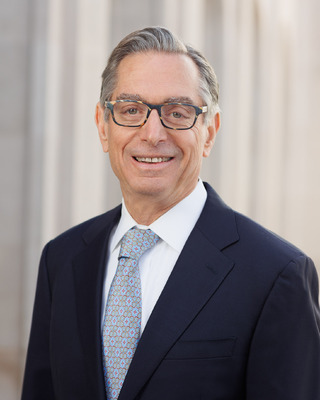
BIO:  Professor Rabban joined the Texas Law faculty in 1983. He served as counsel to the American Association of University Professors for several years; later, served as its general counsel and as chair of its committee on academic freedom and tenure. His teaching and research focus on free speech, academic freedom, higher education and the law, and American legal history. He was a fellow of the John Simon Guggenheim Foundation in 2016 and of the Program in Law and Public Affairs at Princeton University in 2016-17. His most recent book, Academic Freedom: From Professional Norm to First Amendment Right, was published in 2024.


All are welcome * No RSVP required * Light Lunch provided

Constitutional Roundtable with Professor Eleonora Bottini


Please join us on Thursday March 23, 2023 at 12:30pm for an Asper Centre Constitutional Roundtable with Professor Eleonora Bottini on her forthcoming paper titled “Modernizing Constitutions: A comparative analysis of justifications for constitutional reforms.”

The David Asper Centre for Constitutional Rights’ Constitutional Roundtables are an annual series of lunchtime discussion forums that provide an opportunity to consider developments in Canadian constitutional theory and practice. The Constitutional Roundtable series promotes scholarship and aims to make a meaningful contribution to intellectual discourse about Canadian constitutional law.

All are welcome. No Registration or RSVP required. Light lunch will be provided.

Venue: John Willis Classroom FL219, Flavelle House, Faculty of Law, University of Toronto

Abstract: The idea, dear to Thomas Jefferson, that a people cannot be subjected by the laws of the previous generations is in direct contrast with the intention of the constituent power to make the constitution– as opposed to ordinary legislation – last for more than one generation. One way to conciliate this paradox of constitutional theory is the possibility of amending the text of rigid constitutions if and when they become “outdated”. Therefore, a very effective argument to legitimize constitutional amendments has been that they serve the modernization of the constitution, making it compatible with current times without having to substitute it entirely, which could be politically impossible or undesirable. This paper critically examines the uses of the constitutional modernization argument (CMA) from a comparative perspective, by studying examples of constitutional reforms from 2000 to 2022 in various countries. The paper’s contribution is firstly to unpack the structure and assumptions of CMA and to divide it into sub-arguments in order to provide a better understanding of those types of justifications. The paper concludes on a critique of CMA as an unjustified objectivization of constitutional reforms which can mask the changed political preferences that amendments convey.

Eleonora Bottini is Full Professor of Public Law at the University of Caen-Normandy (France) and is currently the Martin-Flynn Global Law Professor at University of Connecticut School of Law. She served previously as associate professor at Sorbonne Law School in Paris and was the Alliance Visiting Professor at Columbia University. She specializes in comparative constitutional law, French constitutional law and legal theory. She has published several articles and book chapters in French, Italian and English and she is the author of a book based on her PhD thesis, “Constitutional sanction: study of a doctrinal argument” (Dalloz, 2016, in French), on the theoretical origins of judicial review.


Examining the Constitutional Concerns of Urbanization and Megacities

By Julia Nowicki

“Urban agglomeration is amongst the most burning policy challenges of the twenty-first century”, says Ran Hirschl, professor of political science and law and fellow of the Royal Society of Canada. “The continued silence of constitutional thought and constitutional scholarship on the issue of cities, urbanization, is just striking.”

On Thursday, November 12th, 2020 Hirschl addressed the constitutional concerns of urbanization and cities’ relative lack of legislative authority during a Constitutional Roundtable discussion about his new book, “City, State: Constitutionalism and the Megacity”, hosted virtually by the Asper Centre. Hirschl says that the impetus for the book came from the 2019 Ontario Court of Appeal decision of Toronto (City) v Ontario Attorney General, which upheld the constitutionality of the Better Local Government Act. Passed in 2018 by the Ontario government, the Act had the effect of cutting the number of municipal wards in Toronto from 47 to 25, ahead of the municipal election that year.

Hirschl began his address by outlining the rapid acceleration of urban growth the world has faced in the last century. In Canada, Hirschl says, 55 per cent of the population lives in six metropolitan areas, and the Toronto metropolitan area itself is home to 20 per cent of Canada’s population. However, these statistics are not uniquely Canadian in nature, and urban population as compared to rural population globally is on the rise. “UN projections suggest that by the end of the 21st century, we will have cities such as Lagos, Kinshasa, Dar es Salaam, Mumbai and Karachi with populations between 70 and 85 […] million people,” Hirschl says. Rapid urban growth raises the issue of extreme density, which in turn may present a major challenge to the realization of social and economic rights of individuals.

In Canada, provinces are viewed as creatures of the province, and recent jurisprudence such as Toronto (City) affirms that provinces have the power to govern municipalities regardless of their relative size or population. This is affirmed in the Constitution Act of 1982, where the division of powers, s.92.8, places “ Municipal Institutions in the Province” within the purview of provincial legislation. In the U.S, cities lack any constitutional personality and are likewise governed by the state, according to a paper written by Hirschl, titled Cities in National Constitutions: Northern Stagnation, Southern Innovation. Issues such as gerrymandering, the power of the state to pre-empt city legislation, and the systemic sell-out of urban assets by states are representative of the relative constitutional weakness of cities in the U.S. Similar controls can be found in Australia, where states govern policy areas from education to infrastructure in cities, Hirschl says.

However, a number of countries in the global south have attempted to strengthen the constitutional protection of cities, Hirschl says. India, as an example outlined in Hirschl’s paper, adopted two constitutional amendments in 1993. The 73rd Amendment addresses the governance of rural settlement and townships, while the 74th Amendment addresses that of cities. Although the latter amendment allows for 18 policy areas of which the state government may devolve power to the municipality, Hirschl writes that in practice impacts of these changes are varied and the successful implementation of city power is often impacted by political factors. In Brazil, a new federal constitution was adopted in 1988. Included within was Article 182, which provides that “urban development policy, carried out by the municipal public authority, according to the general guidelines fixed by law, is intended to order the full development of the social functions of cities and to guarantee the well-being of their inhabitants”; Article 183 granted protections to long-term dwellers from forced evacuations by land developers. This constitutional right to the city, according to Hirschl, was “complemented by the adoption of the City Statute in 2001 as well as the establishment of the Ministry of Cities and the National Cities Council in 2003.” The Ministry was, nevertheless, absolved in 2019 and the City Statue likewise was repealed, Hirschl says. Likely, the most successful attempt to protect city rights, Hirschl says, is the result of efforts in South Africa, the government of which has included an entire chapter within their constitution (1996) pertaining to city rights. Granting city control over land use, planning, and social housing, etc, “framers wanted to explicitly reverse apartheid related urban policy,” Hirschl says.

Although attempts to constitutionalize city power have been met with varied success, Hirschl maintains the importance of large municipalities in addressing various issues, including climate change, housing, or economic inequality.  “It is impossible to address either rising economic inequality […] or climate change, without direct involvement of city government, and so the constitutional empowerment of cities may be thought of as an effective means of addressing the problem in a more bottom up fashion,” Hirschl argues. “Likewise the more constitutional power cities hold, the more they are likely to invest in social housing.”

Urbanization is one of the most important issues facing us today, Hirschl says, and “new thinking […] about constitutionalism and urbanization is the call of the hour.”

A recording of Professor Hirschl’s Constitutional Roundtable can be viewed here.

Julia Nowicki is a 2L JD student at the Faculty of Law and the Asper Centre’s current work-study student.

Constitutional Roundtable with Akis Psykgas

by Ryan Howes

On January 31, 2018, the Asper Centre Constitutional Roundtable Series hosted Athanasios (Akis) Psygkas, Lecturer in Law at University of Bristol and Visiting Scholar at the University of Toronto. His presentation was titled: “The hydraulics of constitutional claims: Four models of democratic constitutionalism and same-sex marriage.” Professor Brenda Cossman, Director of the Bonham Centre for Sexual Diversity Studies, joined as discussant.

There are many actors involved in constitutional interpretation. Psygkas identified a bottom-up process of constitutional evolution wherein multiple actors raise claims with constitutional implications. To articulate this “hydraulics” process, he conducted a case study of the legal recognition of same-sex marriage in four countries: the US, Spain, the UK, and Ireland.

In Obergefell v Hodges, the US Supreme Court held that the Fourteenth Amendment of the US Constitution requires state to issue marriage licenses to same-sex couples. The decision focused on liberty. Justice Kennedy, writing for the majority, provided a list of social actors (“central institutions in American life”) that contributed to the evolving debate of constitutional interpretation regarding same-sex marriage and argued that this debate had now reached a stage of deliberative maturity that permitted the Court to channel this into constitutional law.

In Spain, same-sex marriage was recognized through the legislature, beginning first at the regional level before being formalized in national legislation. In further contrast to the US, the petitions that were put forth in support of legalizing same-sex marriage focused on equality, not liberty. When challenged, the Spanish Constitutional Court stated that it cannot remain “aloof from social reality” and cited statistics concerning Spanish attitudes toward same-sex marriage in making its decision to recognize same-sex marriage.

In the UK, the process to recognize same-sex marriage was largely legislative and proceeded in stages. First, homosexual activity was decriminalized for persons over 21 years of age in 1967. But this provoked some backlash: legislation prohibiting promotion of homosexuality remained in place until 2003. Civil partnerships were created in 2004, which permitted homosexual couples legal recognition. Formal recognition of same-sex marriage came into effect in 2014. Throughout these stages, there was no electoral manifesto concerning same-sex marriage; rather, the process occurred organically through public consultations and hearings at the committee stage of the legislative process. The debate continues in Northern Ireland, where a married, English same-sex couple is challenging the state’s refusal to recognize their marriage.

The Republic of Ireland has direct citizen involvement in constitutional change through referendums, especially when change concerns fundamental laws, like constitutional amendments. The consensus in Ireland, however, had long been against recognizing same-sex marriage. This social attitude had influenced how politicians and the judiciary interpreted relevant legislation and articles of the Irish Constitution, especially Article 41, which concerns family. In 2013, a referendum on same-sex marriage was conducted and by a 62% approval vote brought the 34th Amendment of the Irish Constitution into existence, granting same-sex marriage legal recognition.

Each of these four examples demonstrate the varied systems and means through which social actors influence constitutional interpretation and change. The predominate direction of influence was bottom-up.

Professor Cossman argued that in Canada same-sex marriage recognition was a predominantly court-centric process, with Charter dialogue dominating the arguments. Parliament responded to Supreme Court of Canada (SCC) rulings by changing legislation. This process began with the SCC ruling that the common law definition of marriage as between one man and one woman violated section 15 of the Charter (Halpern v Canada). The Same-Sex Marriage Reference soon followed in 2004. This appears to be an exception to the hydraulics process that Psygkas observed in the four countries discussed. Although there were many activist groups active at this time, the Canadian experience of recognizing same-same marriage appears to have been more of a top-down process and did not exemplify the same hydraulics process Psygkas observed elsewhere. The SCC interpreted the Charter and Parliament followed. Invariably, some bottom-up processes were at play in the Canadian same-sex marriage debate: our Charter is young and reflects Canadian values, and our judges are, after all, from the citizenry.

Psygkas argued that the driving force in this “hydraulics” process is a bottom-up demand for a specific constitutional position within complex institutional structures; the exact form it takes varies depending on the constitution and the institutions present. What implications does this have for when we observe social backlashes or rising sentiments that we perceive to be moving our society in the wrong direction? Current political preoccupations with the so-called “populist” wave are perhaps an instance of this process.

Ryan Howes is a JD Candidate at the Faculty of Law and is the Asper Centre work-study student.