
Young Climate Activists Attempt to Hold Province Accountable for Inadequate Emissions Target

By Amy Chen

In late 2019, Ecojustice and Stockwoods LLP initiated a constitutional challenge (“the Application”) against Ontario’s greenhouse gas reduction target on behalf of seven young climate activists (the “Applicants”). Ontario responded with a motion to strike. Mathur et al v Her Majesty the Queen in Right of Ontario was heard via teleconference on July 13, 2020, with judgment reserved.  The Applicants were represented by Nader Hasan, the Asper Centre’s upcoming constitutional litigator-in-residence, and Justin Safayeni.

Background

In 2018, the Ford provincial government passed the Cap and Trade Cancellation Act (“CTCA”), repealing the Climate Change Mitigation and Low-Carbon Economy Act (“old Climate Change Act”). Under s. 3(1) of the CTCA, the provincial government “shall establish targets for the reduction of greenhouse gas emissions in Ontario and may revise the targets from time to time”. The new target is set out in the province’s new Environmental Plan: “Ontario will reduce its emissions by 30% below 2005 levels by 2030”.  In comparison, the old target (when calibrated) was to reduce the emissions by about 45%.

The public interest Applicants (Sophia Mathur, Zoe Keary-Matzner, Shaelyn Wabegijig, Shelby Gagnon, Alex Neufeldt, Madison Dyck, Beze Gray) in the present case are climate activists between the ages of 13 and 24. The Applicants argue that the new target, as well as the repeal of the old Climate Change Act, violates the rights of Ontario youth and future generations under ss. 7 and 15 of the Charter. Ontario is exacerbating the current climate emergency and threatening the lives of all Ontarians by weakening the province’s target. Canada has an international obligation, under the Paris Agreement, to limit global warming to 1.5 oC above pre-industrial levels and prevent the effects of climate change from becoming irreversible. Ontario’s greenhouse gas emission levels will be too high to meet this obligation even if the target is fulfilled, making the target arbitrary and irrational. The Applicants seek mandatory orders requiring Ontario to set a “science-based” greenhouse gas reduction target for 2030 and to revise its climate action plan accordingly.

Summary of Motion Hearing

The issue of the motion was whether the Application should be struck for disclosing no reasonable cause of action.  The hearing primarily revolved around three issues: (1) whether the Application is justiciable, (2) whether the claims within the Application are “inherently speculative in nature”, and (3) whether the Application requires the recognition of positive rights, and if so, whether the Application can be struck on that basis.

(1) Whether the Application is Justiciable

Ontario’s first argument was that the Application is non-justiciable, or that the courts do not have the institutional capacity or legitimacy to adjudicate on this case. Ontario relied on Tanudjaja v Attorney General of Canada, a Charter challenge against the “social conditions” created by the federal and provincial governments that perpetuate homelessness and inadequate housing. The Ontario Court of Appeal found the case to be non-justiciable because there was “no judicially discoverable and manageable standard for assessing… whether [the governments’] housing policy is adequate”. Ontario argued that this Application, like Tanudjaja, asks the Court to assess the soundness of public policy, which is beyond its institutional capacity. The target is a piece of public policy that outlines Ontario’s “aspirations” regarding climate action, not a legally binding commitment.  The Applicants are asking Ontario to establish a “science-based” target that would allow for a “stable climate system”; these are not concrete, legal parameters that could be judicially reviewed.

The Applicants argue that the target is a policy made in pursuant to a statutory mandate (the CTCA), which falls under the definition of “law” for the purposes of a Charter challenge (Greater Vancouver Transportation Authority v. Canadian Federation of Students). The Applicants are challenging actual laws, not merely “social conditions”, and seeking relief defined by scientifically knowable standards. These standards can be judicially determined and have been judicially determined by courts in international jurisdictions. Neither complexity nor novelty can justify striking the claim.

(2) Whether the Application is “Inherently Speculative In Nature”

Section 7 Charter claims cannot be premised on speculations about the effects of government action (Operation Dismantle v. The Queen).  Ontario’s second argument was that the Applicants’ section 7 claims are speculative and incapable of being proven – the claims assume that the target determines actual emissions, that the target will not change, and that federal policy will not have an effect on Ontario’s emissions.

The Applicants argue that they fully intend to prove their claims based on expert evidence, and whether they would be successful in doing so should be determined at a hearing on its merits. As per Bedford v Canada and Canada v PHS Community Services Society, Charter applicants only have to establish a “real and substantial connection” between the impugned government conduct and the alleged harm. The Applicants are allowed to seek relief for potential future harms even if the government is not the dominant cause of these future harms.

(3)The Issue of Positive Rights

Ontario’s final arguments concerned the government’s positive obligations. First, Ontario does not have any constitutional obligations to keep the old Climate Change Act. Unless there was a constitutional obligation to enact the old legislation, the Ontario legislature is free to repeal and replace it (Barbra Schlifer Commemorative Clinic v. Canada). Second, the Applicant is asking Ontario to take positive steps to combat the adverse effects of climate change, even though neither ss. 15 or 7 of the Charter gives individuals positive rights. Although Gosselin v. Québec left open the possibility that there may be “special circumstances” where positive rights could be recognized, many appellate cases have declined to recognize these positive rights. The lower courts are therefore bound by precedent until the Supreme Court of Canada changes the law (Tanudjaja, trial decision).

The Applicants argue that this case does not require the recognition of positive rights. This case is not merely challenging the repeal of legislation or government inaction, but directly challenging government action. The Ontario government regulates, authorizes, and incentivizes dangerous levels of greenhouse gas emissions through the CTCA and the target. The law is clear that this authorization and regulation is enough to constitute a reasonable cause of action (Dixon v. Director, Ministry of the Environment). The Applicants do not seek a declaration regarding HOW the target is to be achieved, and hence are not demanding any positive obligations from the government. They are merely demanding that the target and the climate action plan be constitutionally compliant.  Even if this Application requires the recognition of positive rights, many courts have relied on Gosselin to deny motions to strike. To strike the claim at this stage would freeze section 7 rights in a manner that is contrary to the “living tree” constitutional interpretive principle.

What Next?

The outcome of this motion will serve as a critical turning point in the fight for climate justice by answering one key question:  Can the provincial government be held legally accountable for its inadequate climate action plan? In an interview with the Asper Centre, Mr. Hasan posited that there could be positive outcomes for climate justice whether the claim is struck or not. If the claim is struck, the Applicants would likely appeal the decision; such an outcome would give the appellate courts an opportunity to consider the complex legal issues involved and set a precedent for climate change litigation in Canada. If the claim proceeds, the Applicants would be permitted to present their evidentiary record. A judge would hear “striking and chilling” testimonies regarding the catastrophic effects of climate change and the fact that these effects will become irreversible if drastic action is not taken. As stated by Mr. Hasan: “I feel quite confident that, if we ever get the evidentiary record in front of a judge, the judges are going to want to do the right thing.”

Additional arguments were raised in the parties’ written submissions. Ontario’s arguments are stated in their notice of motion to strike. The Applicant’s arguments can be found in their factum and on their website.

For more information regarding our governments’ ss. 7 and 15 constitutional obligations to address  climate change, see the Asper Centre’s UTEA working group publication- “Give our Children A Future: The Moral and Legal Obligations of the Government of Canada to Act on Climate Change”.

Amy (Jun) Chen is a 1L JD Candidate at the Faculty of Law and is the Asper Centre’s current summer Research Assistant.
What Does Vavilov Mean for Constitutional Issues in Administrative Law?

by Cheryl Milne

It seems like a lifetime ago that I last attended an in-person legal conference. It was only March 9th, and while the specter of COVID-19 was present (there were hand sanitizer dispensers at the elevator banks and we all used them), social distancing was not yet a phrase on everyone’s tongue as we sat shoulder to shoulder in the downtown conference facility. The conference hosted by Osgoode Hall Law School was a day-long examination of the Supreme Court of Canada’s long-awaited administrative law decision, Canada (Minister of Citizenship and Immigration) v Vavilov, 2019 SCC 65. I was asked to discuss its implications for constitutional issues.

The short answer is that the decision poses more questions than answers. The long version is what I think can be covered in a blog post rather than an academic paper. Hence, my attempt, from the relatively safe confines of my kitchen, to summarize what I said on March 9th and what I have thought about it since. I should add that I was joined on this two-person panel by Senwung Luk of OKT LLP, who addressed the implications for the duty to consult and accommodate, and whose succinct answer to that question was, “utter chaos.”

For those of you who were not hanging on the edge of your seats for the duration of 2019 awaiting the Court’s pronouncement on the standard of review in administrative law, the appeal involved the judicial review of the decision of the Registrar of Citizenship to cancel the Canadian citizenship of the Canadian-born son of parents later revealed to be Russian spies – their story served as inspiration for the television series, The Americans. That got some of your attention!

I don’t propose to analyze the Court’s overall approach to the administrative law questions and the standard of review here. For a more comprehensive treatment, I suggest Paul Daly’s blog Administrative Law Matters which links to his longer paper posted on SSRN. My task was to discuss the constitutional issues that the majority purported not to address.

In refusing to comment on its earlier administrative law decision in Doré v Barreau du Québec, 2012 SCC 12, the Court leaves open many questions. Doré established that the standard of review of an administrative decision that impacted Charter rights was reasonableness, rather than the application of the Oakes test under s. 1 of the Charter, but in keeping with the general theme of proportionality under s.1, the decision needed to be a proportional balancing of the Charter right with the governing statutory objective. This approach was reiterated in Loyola High School v. Quebec (Attorney General), 2015 SCC 12 and the Trinity Western decisions (referenced below). It remains controversial, with critics claiming that it fails to respect the primary or priority of Charter rights[1] and fails to place the onus on government for justifying a limitation on rights as is required under s. 1 of the Charter.[2]

The majority states clearly that “constitutional matters require a final and determinate answer from the courts” (para.55), thus attracting the correctness standard of review. But that applies only to constitutional questions, such as a challenge to the constitutional validity of legislation. The majority of the Court goes on to state,

However, it is important to draw a distinction between cases in which it is alleged that the effect of the administrative decision being reviewed is to unjustifiably limit rights under the Canadian Charter of Rights and Freedoms (as was the case in Doré) and those in which the issue on review is whether a provision of the decision maker’s enabling statute violates the Charter… [para. 57]


So, you might ask what is so unclear about that? The reasonableness standard continues to apply to the Doré set of cases, while challenges to statutes require the standard of correctness. But the Court interchanges constitutional questions with the term constitutional matters, which include federalism issues and treaty rights, and glosses over any confusion that could arise over what could fit within that category. For example, the Ontario Courts of Justice Act defines a constitutional question as one that invokes the constitutional validity or applicability of a statutory provision as well as a claim for a constitutional remedy under s.24(1) of the Charter. Does this mean that the standard of correctness applies to a claim for a constitutional remedy based on government action as opposed to the validity of a statute, as anticipated by R v Conway, 2010 SCC 22?

To illustrate the Court’s inconsistency on this issue alone, one need only look to the case of Ernst v Alberta Energy Regulators, 2017 SCC 1, admittedly not a judicial review, but a case that provides confusing analysis about what constitutes a constitutional question. The plaintiff was seeking Charter damages against the administrative body for allegedly infringing her Charter right to freedom of expression. The regulator raised the statutory provision that barred claims against it to seek a dismissal of the proceedings, while Ernst argued that the provision could not be interpreted so as to prevent a Charter claim. A minority of the Court agreed with the regulator’s interpretation that the legislation barred a damages claim, suggesting the Ernst ought to have sought a judicial review instead. Their ruling dismissing the appeal became the majority decision when Justice Abella reasoned that the claim should be dismissed because the plaintiff failed to file a Notice of Constitutional Question to have the provision declared unconstitutional. If that sounds confusing to you, you are not alone.

A further constitutional matter that could also fall within the category of general questions of law of central importance to the legal system as a whole, which is another category requiring the correctness standard of review, is the consistent interpretation of a Charter right itself. As McLachlin, C.J. (as she then was) noted in her concurring reasons in Law Society of British Columbia v Trinity Western University, 2018 SCC 32, possibly conflating reasonableness and correctness in this context,

…[T]he scope of the guarantee of the Charter right must be given a consistent interpretation regardless of the state actor, and it is the task of the courts on judicial review of a decision to ensure this. A decision based on an erroneous interpretation of a Charter right will be unreasonable. Canadians should not have to fear that their rights will be given different levels of protection depending on how the state has chosen to delegate and wield its power. [para. 116]


In stating that it was not revisiting Doré, the majority said that “reconsideration of [its approach to the standard of review of reasonableness was] not germaine to the issues in this appeal” [para.57]. To properly examine this statement, one needs to dip one’s toe into the majority’s revised reasonableness framework. In asserting that the role of the reviewing court is to review and not to decide the issues themselves, the majority states that the review does not entail an “attempt to ascertain the ‘range’ of possible conclusions that would have been open to the decision maker” [para.83]. This specifically contradicts the language of Doré [para. 56] in respect of the proportionality analysis and the approach to judicial review generally enunciated in Dunsmuir v. New Brunswick, 2008 SCC 9 [para. 47]. The Court reiterated this pre-Vavilov approach in Trinity Western University v Law Society of Upper Canada, 2018 SCC 33, where Justice Abella stated for the majority,

The reviewing court must consider whether there were other reasonable possibilities that would give effect to Charter protections more fully in light of the objectives, always asking whether the decision falls within a range of reasonable outcomes [Doré, at para.57; Loyala, at para. 41, citing RJR-MacDonald Inc. v. Canada (Attorney General), 1995 CanLII 64 (SCC), [1995] 3 S.C.R. 199, at para. 160). [para. 36]


It is difficult to ascertain whether a given decision that is required to balance Charter rights against legislative purpose is proportional without asking whether the decision falls within a range of reasonable outcomes. While the section 1 Oakes test is not applicable, the imperative of minimally impairing a Charter right is central to the proportionality analysis.

Another aspect of the decision that raises questions about the approach to expect in future cases is the Court’s treatment of context. The contextual approach to determining the standard of review has been clearly rejected. Reasonableness, even where Charter rights are implicated (other than a constitutional question), is the presumptive standard. However, context still plays a role in the way that a robust reasonableness review is conducted.

The majority states, “what is reasonable in a given situation will always depend on the constraints imposed by the legal and factual context of the particular decision under review” [para. 90]. However, it is also important to note that the majority in Trinity Western also stated that in the Charter context reasonableness and proportionality are synonymous, suggesting, perhaps, a different approach to the standard of reasonableness given that one could argue that proportionality requires a particular approach when assessing the impact on Charter protected rights.

While we appear to be stuck with Doré for the foreseeable future, that may not be a bad thing in light of the Court’s deferential approach to reasonableness in Vavilov. However, questions still remain under that approach as to who bears the onus for demonstrating the reasonableness of a decision, with the Courts generally requiring those challenging the decision to meet that onus. This leaves the individual alleging the breach of their Charter rights with the burden, unlike the onus on government under the Oakes test.

So, my short summary was that there are more questions than answers in respect of the implications of Vavilov for constitutional issues. Those questions for me include: What is a constitutional question? Does the interpretation of the Charter right invoke the standard of correctness or is an incorrect interpretation unreasonable? How will the context of a Charter claim alter the reasonableness standard, or will it? How will the proportionality analysis be conducted if the reviewer is not to examine alternative outcomes that could have been available? And, does the requirement of justification and the focus on reasons address any of the issues pertaining to onus that have been the subject of the criticism of Doré?

Cheryl Milne is the Executive Director of the David Asper Centre for Constitutional Rights

[1] Macklin, Audrey, Charter Right or Charter Lite? Administrative Discretion and the Charter (October 9, 2014). Supreme Court Law Review, Vol 67, 2014. Available at SSRN: https://ssrn.com/abstract=2507801

[2] Liston, Mary, Administering the Charter, Proportioning Justice: Thirty-five Years of Development in a Nutshell Canadian Journal of Administrative Law & Practice; Toronto Vol. 30, Iss. 2, (Jun 2017): 211-246.

Frank v Canada: Contrasting the Section 1 Analyses

By: Sahil Kesar and Jasmit De Saffel

On January 11, 2019 the Supreme Court issued its decision on the constitutional challenge to provisions of the Canada Elections Act detailing residence requirements for voting in federal elections. The provisions in question denied the right to vote in federal elections to Canadian citizens residing abroad for five consecutive years or more.  The Court sided with the expats and held that the impugned provisions infringe section 3 of the Charter and were not saved under section 1.  Frank v Canada was substantively significant for deepening the constitutional protection of section 3 voting rights for Canadians. The decision was also procedurally note-worthy, particularly in the strongly contrasting section 1 analyses of the majority and dissent decisions.

While both the majority and dissent found a pressing and substantial purpose to the non-resident limitation, they both determined it to be different from each other. Writing for the majority, Wagner CJ found that the purpose of the legislation is to maintain the fairness of the electoral system to resident Canadians. Brown J and Cote J’s dissent found the purpose to be to privilege a relationship of some currency between electors and their communities.

The majority did not come to a conclusion on rational connection but they did reject the Attorney General’s arguments, suggesting that it is likely they did not find a rational connection. The dissent found a rational connection between the 5-year period and the objective of preserving currency between electors and their communities. They found that the majority’s reasoning in dismissing the rational connection, taken to its conclusion, creates inconsistencies in their argument.

The majority determined the appeal on minimal impairment. They held that the 5-year period has no basis and is over-inclusive as it applies even to those to whom it is not intended to apply. The dissent stated that, based on the options available to Parliament, the 5-year period was the least impairing option, especially considering the non-resident cut-offs for other similar democracies and that citizens can vote again once they re-establish residency.

Finally, on proportionality, the majority did not think the salutary effects outweigh the deleterious effects. They asserted that the impugned provisions disenfranchise over one-million non-resident Canadians who have been abroad for 5 years or more and that it is unclear how this advances fairness in the electoral system. It severely limits the ability of non-resident citizens to vote especially considering the laws that might be enacted could affect their citizenship. The dissent took the view that the salutary effects outweigh the deleterious effects mentioned by the majority. Addressing the concerns of reciprocity between exercising the right to vote and bearing the burden of Canadian laws and protecting the integrity of the electoral system outweigh any concerns with the legislation. They also found that the majority overlooks the importance of residence and effective representation in weighing the effects.

The dissent’s deferential section 1 analysis did not decide this case but should be noted for giving the government more leeway in justifying infringements on voting rights. Considering Rowe J’s openness to a limit based on residency in his concurring judgement, one wonders if there is potential for the dissent’s less stringent section 1 analysis to decide future cases about positive rights guaranteed in the Charter?

Sahil Kesar is the current Asper Centre half-time clinic student and a 3L JD candidate at UTLaw.

Jasmit de Saffel is this year’s Asper Centre’s work-study student and a 1L JD candidate at UTLaw.


Reflections at the Asper Centre’s Ten Year Anniversary Event


by Josh Foster

On October 17th, the University of Toronto Faculty of Law opened its doors in celebration of the David Asper Centre for Constitutional Rights’ 10th Anniversary. To borrow from the submissions of Joseph Arvay in Carter v Canada (Attorney General), the Asper Centre’s 10th Anniversary was a “momentous occasion”.  

Founded through the generous donation of UofT Law alumnus David Asper (LLM ’07), the Asper Centre has marshalled students, faculty and members of the bar toward advancing Canadian constitutional law, and access to constitutional rights since September 2008. This effort has afforded the Asper Centre the opportunity to intervene on multiple constitutional appeals, twenty of which have been before the Supreme Court. These appeals have included such noteworthy cases as: Conway v Her Majesty the Queen, et alPrime Minister of Canada et al. v Omar KhadrAttorney General of Canada v Downtown Eastside Sex Workers United Against Violence Society and Sheryl Kiselback, and Canada v Bedford. In addition to its role as an intervenor, the Asper Centre has prepared policy briefs for numerous Senate Standing Committees, hosted panel discussions on topical constitutional issues, and contributed to legal scholarship.  

In recognition of the Asper Centre’s dedication to legal advocacy, education, and research, the Faculty of Law hosted a discussion between Mary Eberts and Joseph Arvay. Eberts, a former Asper Centre Constitutional Litigator-in-Residence, has acted as counsel to parties and intervenors at all levels of court and before administrative tribunals and inquests.  Further, she advocated for the present language of section 15 of the Charter, and was one of the founders of the Women’s Legal Education and Action Fund (LEAF). Since 1991, Eberts has been litigation counsel to the Native Women’s Association of Canada (NWAC). Arvay, the first Constitutional Litigator-in-Residence for the Asper Centre, is recognized as one of Canada’s foremost constitutional litigators. In 1990, he co-founded the firm of Arvay Finlay Barristers and has been awarded honourary doctorates of law from both York University and the University of Victoria. Together, Arvay and Eberts have appeared before the Supreme Court in more than fifty constitutional appeals. Both were made Officers of the Order of Canada this year for their work. 

The discussion between Eberts and Arvay, moderated by former Supreme Court of Canada Justice Thomas Cromwell, focused on wide-ranging topics relevant to public interest litigation, five of which are highlighted here.  

First, Eberts and Arvay shared their views on early Charter jurisprudence as well as the development of the s. 15(1) equality guarantee. By now it is clear that the Supreme Court’s interpretation of s. 15(1) has been inconsistent. However, both Eberts and Arvay agreed that it has now stabilized. Importantly, Eberts would welcome greater judicial consideration for the meaning of “equal protection and equal benefit of the law” within the equality guarantee.  

Second, Eberts and Arvay were asked to express their views on the development of Aboriginal law and Indigenous rights. Notwithstanding the progress made through cases like Delgamuukw v British Columbia and Tsilhqot’in Nation v British Columbia, the Asper Centre’s distinguished speakers agreed that there is more to be done. For instance, Eberts suggested that s. 35 of the Constitution Act, 1982 has been thus far, interpreted too narrowly. Moreover, greater regard must be had for the role of “the emerging Indigenous nations in Canadian federalism”. From the perspective of counsel for Indigenous litigants, Arvay articulated the difficult task of seeking relief from Canadian courts while limiting the room for those same courts to make pronouncements on Indigenous law.  

Third, Cromwell asked Eberts and Arvay to share their opinions on the role of interveners in constitutional litigation. Of course, having acted as counsel for numerous interveners, each were well positioned to answer. For both Eberts and Arvay, interveners play an integral role to constitutional litigation, namely, ensuring that all interests/perspectives relevant to an issue are fairly represented. Unfortunately, the Supreme Court’s continued shift toward minimizing the time given for interveners to make oral submissions tempers their efficacy and utility. The Asper Centre, as a frequent intervener in the Supreme Court has equally been impacted by these temporal limitations.   

Fourth, and perhaps most surprisingly, Eberts and Arvay expressed their views on large law firm environments and whether they are conducive to pubic interest litigation. The fact that most public interest litigation is done on a pro bono basis presents an obvious challenge to any private practice, including large firms. Drawing on their respective experiences in large firms, both Eberts and Arvay suggested that they can serve as excellent environments to facilitate public interest and constitutional litigation. With that said, young lawyers in these settings must be careful not to over commit to pro bono litigation and thereby become unable to meet competing demands.  

Lastly, Eberts and Arvay explored their experiences in seeking advanced or special costs orders. For Eberts and Arvay, the law on advanced costs is in an unsatisfactory state. A failure to receive advanced costs for litigants is at the least disheartening and at the worst, prohibitive of meritorious claims. Presently, the bar for granting an advanced costs order is simply too high while revealing the financial vulnerability of the moving party.  

In summary, the Asper Centre’s 10th Anniversary celebration was an engaging and informative event. Mirroring the Asper Centre’s mandate, the questions posed to its esteemed guests were oriented around topical issues in constitutional law and access to constitutional rights. At the Direction of Cheryl Milne, and with the support of its Program Coordinator, Tal Schreier, as well as UTLaw’s faculty and students, the Asper Centre has made significant strides in advancing constitutional rights, research and public policy in Canada. Further, the Asper Centre’s involvement in constitutional advocacy initiatives and litigation has provided students with the opportunity to gain practical experience under the tutelage of experienced advocates such as Mary Eberts and Joseph Arvay.

Josh Foster is a 3L JD Candidate at the Faculty of Law and an Asper Centre Clinic alumnus

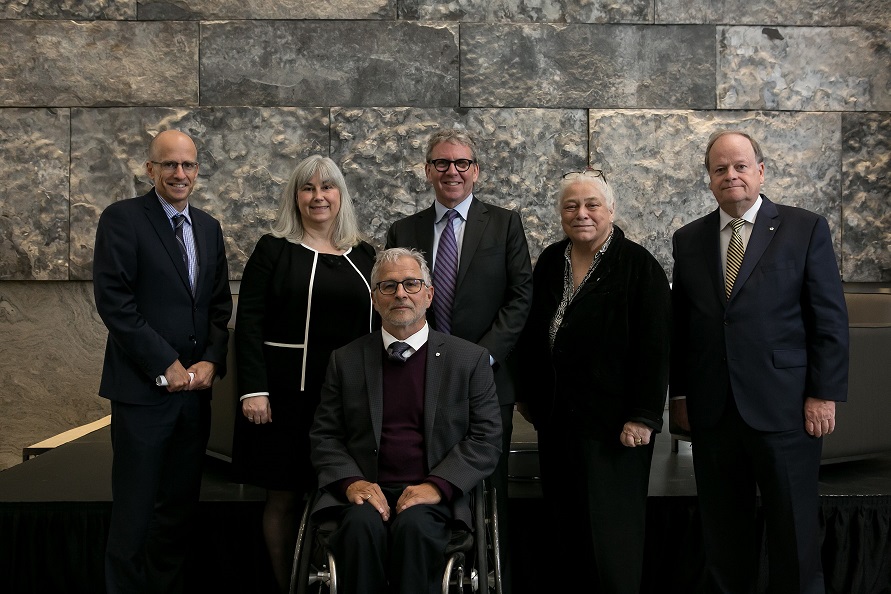
From L to R, Dean Ed Iacobucci, Cheryl Milne, Joseph Arvay (sitting), David Asper, Mary Eberts, and Thomas Cromwell (photos by D. Chang)

Above the Law? Understanding the Notwithstanding Clause

By Catherine Ma

On September 20, 2018 the David Asper Centre for Constitutional Rights convened a panel with U of T Law Professors Yasmin Dawood and Lorraine Weinrib, and Goldblatt Partners’ Steven Barrett to discuss the constitutional challenge to the Better Local Government Act. The proposed legislation would have reduced the size of Toronto’s city council in the midst of its municipal election, as well as ending mandatory election of regional councillors across all regional municipalities. Superior Court Justice Edward Belobaba struck down the legislation, finding that it was an unjustified infringement to s.2(b) of the Charter. The Court of Appeal of Ontario ultimately granted a stay of the Superior Court’s decision until a full appeal could be heard after the election. Its effect was allowing the Better Local Government Act to govern the 2018 municipal elections in Ontario.

Before the Court of Appeal rendered its decision, Ontario’s Premier Doug Ford had threatened to invoke the notwithstanding clause if a stay was not granted. The notwithstanding clause allows the federal government or a provincial government to enact legislation that overrides certain fundamental freedoms, legal rights, and equality rights guaranteed in the Charter. Premier Ford further warned that he would not hesitate to use the notwithstanding clause in the future, without providing specific details.

The Panel Discussion

The panelists all provided unique perspectives regarding the constitutional challenge to the Better Local Government Act and the notwithstanding clause itself.

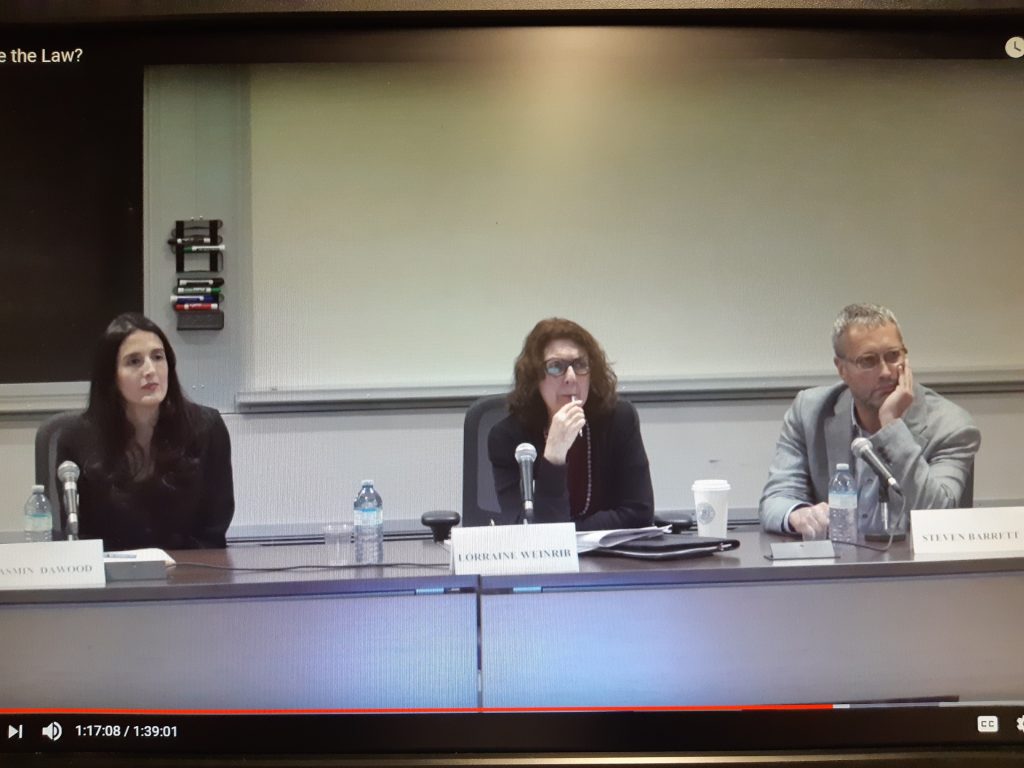
Above the Law panelists: Prof Yasmin Dawood, Prof Lorraine Weinrib, Steven Barrett [click on photo for link to webcast of panel]

Professor Dawood summarized the Superior Court and Court of Appeal decisions. She noted the that it was “novel” to argue that the Better Local Government Act infringed s.2(b) by depriving voters of their right to cast a vote that would enable effective representation. She questioned whether the legislation also infringed the s.2(b) rights of political donors.  Professor Dawood ultimately concluded, “Interrupting an election midstream is inappropriate and completely inconsistent with notions of democratic and electoral fairness, even if it is the case that the provincial government has the power to do so.” Democratic legitimacy and electoral fairness requires that the provincial government consult all stakeholders before changing election laws.

Professor Weinrib focused on the principles that govern use of the notwithstanding clause. She emphasized that the drafters envisioned the notwithstanding clause as a narrow exception, used only when a Charter right would “fundamentally damage society’s stability and well-being.” She added that the notwithstanding clause cannot be applied retroactively; in this case, the provincial government cannot invoke the clause since candidates already spent resources, social capital, volunteers, and energy; and interacted with their constituents. Professor Weinrib further criticized Premier Ford for threatening to invoke the notwithstanding clause whenever the courts strike down provincial legislation as unconstitutional. She recommended asking the Supreme Court of Canada to clarify the constitutional principles that govern the use of the notwithstanding clause.

Mr. Barrett discussed specific Charter arguments made in the case, as well as the Court of Appeal’s decision. He commented that for the stay application, it was “unusual” for the Court of Appeal to examine the substantive merits of the s.2(b) argument rather than the usual factors for a stay application. He criticized the Court of Appeal for ignoring how the Better Local Government Act undermines the effectiveness of candidates’ political speech. Mr. Barrett criticized Premier Ford for threatening to routinely use the notwithstanding clause in the future as well. He warned this threat has a “corrosive effect” on judicial legitimacy and potentially judicial independence. Individuals must make it clear that using the notwithstanding clause is only appropriate in exceptional circumstances.

Other Uses of the Notwithstanding Clause

Provincial governments have rarely used the notwithstanding clause, particularly for its intended legal function. From 1982 to 1985, the Parti Québécois placed a notwithstanding clause in all of its new legislation and retroactively amended all existing laws to include such a clause in order to protest the enactment of the Constitution Act, 1982, which it had not signed. Its actions were a political protest, rather than aimed at protecting a specific law from a Charter challenge.

In 1988, Quebec’s provincial government invoked the notwithstanding clause in response to the companion cases, Ford v Quebec (AG) and Devine v Quebec (AG), which struck down provincial legislation that prohibited the public use of all languages other than French. The legislation already had a notwithstanding clause to override s.2(b) of the Charter; however, the Supreme Court of Canada held that the legislation unjustifiably infringed a similar guarantee in Quebec’s Charter of Rights and Freedoms. The provincial government then introduced a virtually identical bill, except with clauses to override the Charter and the Quebec Charter for a five-year period. Following the expiration of this period, the provincial government amended the law. The amended law did not include a notwithstanding clause.

In 2017, Saskatchewan’s provincial government used the notwithstanding clause in the School Choice Protection Act. Its use responded to Good Spirit School Division No. 204 v Christ the Teacher Roman Catholic Separate School Division No. 212, which held that funding non-Catholic students who attended Catholic schools was an unjustified infringement of s.2(a) and s.15(1) of the Charter. Saskatchewan Premier Brad Wall justified its use on the basis that the legislation would protect school choice for parents and students, including faith-based options. There was no political opposition to its use.

Most recently, Québec Premier François Legault threatened to use the notwithstanding clause in order to pass a controversial “secularism law.” This proposed legislation would prevent public servants – including teachers, police officers, and judges – from wearing religious garments while performing public functions. The law is widely interpreted as targeting Muslim women who wear a niqab.

It is hoped that Ford and Legault’s recent threats will not embolden others to invoke the notwithstanding clause inappropriately. In light of these threats, the appropriate use of the Constitution’s notwithstanding clause must continue to be scrutinized, perhaps as Professor Weinrib suggested by the Supreme Court of Canada itself.

Catherine Ma is a 3L JD Candidate at the Faculty of Law and was a student leader of the Asper Centre’s Indigenous Rights student working group in 2017-2018.